
The convergence of cloud gaming and the burgeoning metaverse represents a significant inflection point in how we experience digital worlds. Once a niche pursuit, cloud gaming has matured into a powerful engine capable of streaming high-fidelity experiences across a multitude of devices, democratizing access to cutting-edge graphics and complex gameplay. This technological leap is not merely about playing games remotely; it’s about laying the foundational infrastructure for persistent, interactive, and immersive virtual environments that define the metaverse. This article will explore this critical juncture, examining how cloud gaming’s advancements are directly fueling the metaverse’s potential and what this transformation signifies for the future of digital interaction and entertainment.
The democratizing power of cloud gaming
Cloud gaming has rapidly evolved from a theoretical concept to a practical reality, fundamentally altering the accessibility of high-end gaming. Historically, immersive gaming experiences were confined to powerful, expensive consoles or PCs. This created a significant barrier to entry for many consumers. Cloud gaming services, however, shift the processing power from the user’s local hardware to remote servers. This means that even on a budget smartphone, a low-spec laptop, or a smart TV, users can access and play graphically intensive AAA titles with minimal latency. This democratization is crucial for the metaverse, as it removes the need for specialized, high-cost hardware, opening up participation to a far wider global audience. Imagine stepping into a complex virtual world without needing to invest hundreds or thousands of dollars in a gaming rig – that’s the promise cloud gaming delivers, making metaverse experiences accessible to everyone.
Building the metaverse, one stream at a time
The infrastructure built for cloud gaming is intrinsically aligned with the demands of the metaverse. The metaverse, at its core, is envisioned as a persistent, interconnected network of 3D virtual worlds where users can interact, socialize, create, and play. This requires massive computational resources for rendering complex environments, simulating realistic physics, and managing countless simultaneous user interactions. Cloud gaming platforms are already adept at handling these challenges. They utilize distributed server networks, advanced streaming protocols, and sophisticated data management to deliver seamless experiences. As cloud gaming technology scales and improves, it directly contributes to the metaverse’s ability to host larger, more detailed, and more interactive virtual spaces. The latency reduction and bandwidth optimization achieved by cloud gaming are precisely what will allow for the fluid and responsive interactions essential for a truly immersive metaverse.
Beyond gaming: cloud-powered metaverse experiences
While gaming is the most immediate application, cloud gaming’s underlying technology is paving the way for a broader metaverse transformation. The ability to render and stream complex 3D environments in real-time opens doors to a multitude of non-gaming metaverse applications. Think of virtual workspaces where colleagues can collaborate in photorealistic 3D offices, educational institutions offering immersive virtual field trips, or virtual retail spaces where consumers can “try on” digital clothing. These experiences, like cloud gaming, will rely heavily on remote processing and efficient streaming. The advancements in areas like real-time rendering, AI-powered NPCs (non-player characters), and physics engines driven by cloud infrastructure will be transferable and essential for building these diverse metaverse facets. The technological leaps made in optimizing streaming for milliseconds of latency in games are directly applicable to ensuring smooth, believable interactions in any virtual environment.
Challenges and the road ahead
Despite the immense potential, several challenges remain before cloud gaming fully propels the metaverse to its full potential. Latency, while significantly reduced, can still be a bottleneck for hyper-realistic and highly interactive experiences, especially in areas with poor internet infrastructure. The cost of running massive server farms and ensuring global coverage is substantial. Furthermore, developing truly compelling and engaging metaverse content that leverages the full capabilities of cloud streaming is an ongoing creative and technical endeavor. Data security and user privacy within these vast virtual spaces are also paramount concerns that need robust solutions. Addressing these hurdles will require continued innovation in network infrastructure, compression algorithms, and the development of intuitive, powerful creation tools for metaverse developers.
The synergy between cloud gaming and the metaverse marks a pivotal moment in digital evolution. Cloud gaming has matured, offering the necessary infrastructure and accessibility to bring complex virtual worlds within reach for billions. As we’ve explored, its ability to democratize access and its technological foundations are directly fueling the metaverse’s development. From gaming to virtual collaboration and education, the implications are profound. While challenges in latency, infrastructure, and content creation persist, the trajectory is clear: cloud gaming is not just enhancing our gaming experiences; it is actively building the very fabric of the metaverse. This convergence promises a future where immersive, interactive digital realities are not just a possibility, but an accessible, everyday part of our lives.
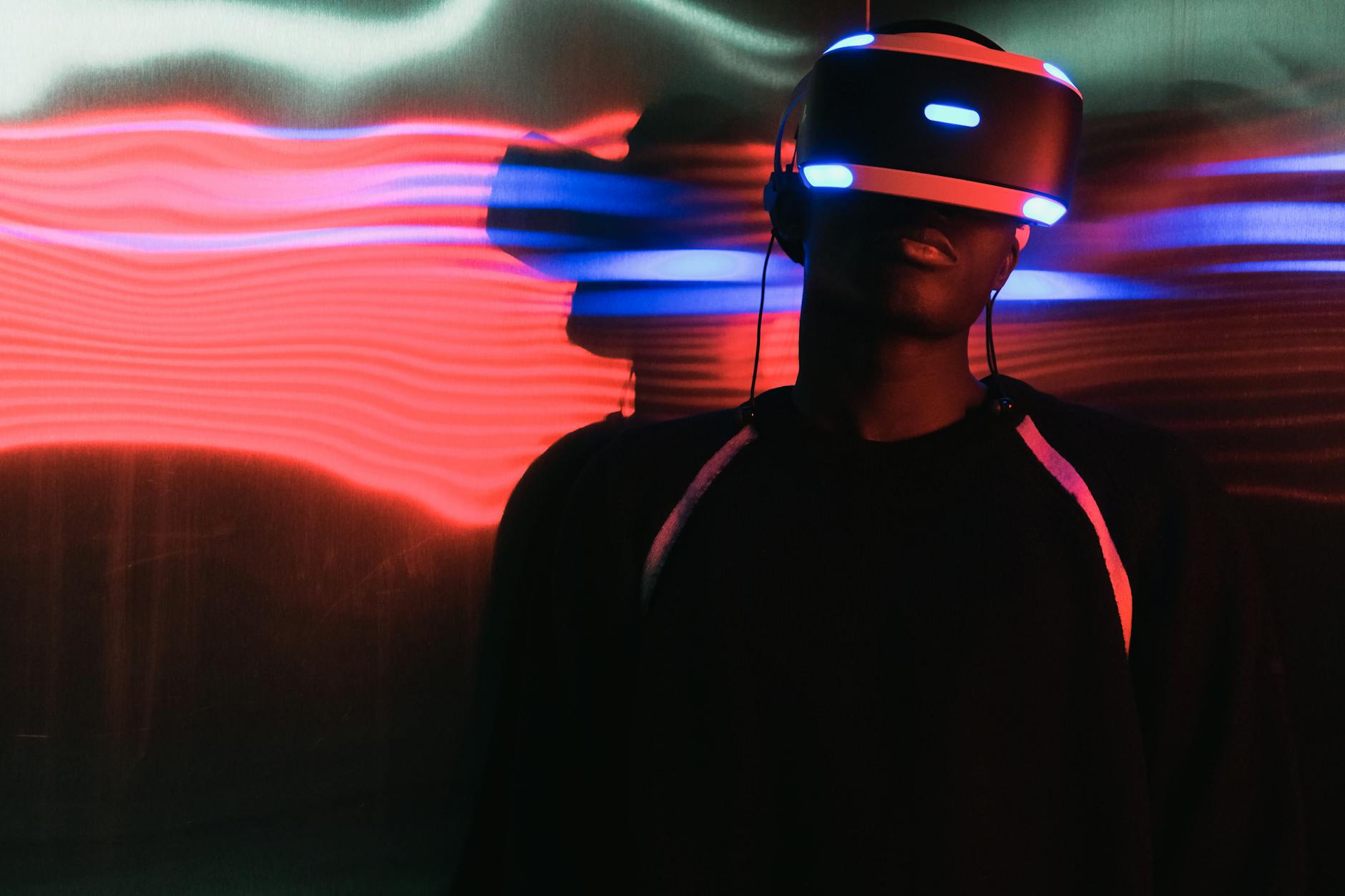
Image by: SHVETS production
https://www.pexels.com/@shvets-production