

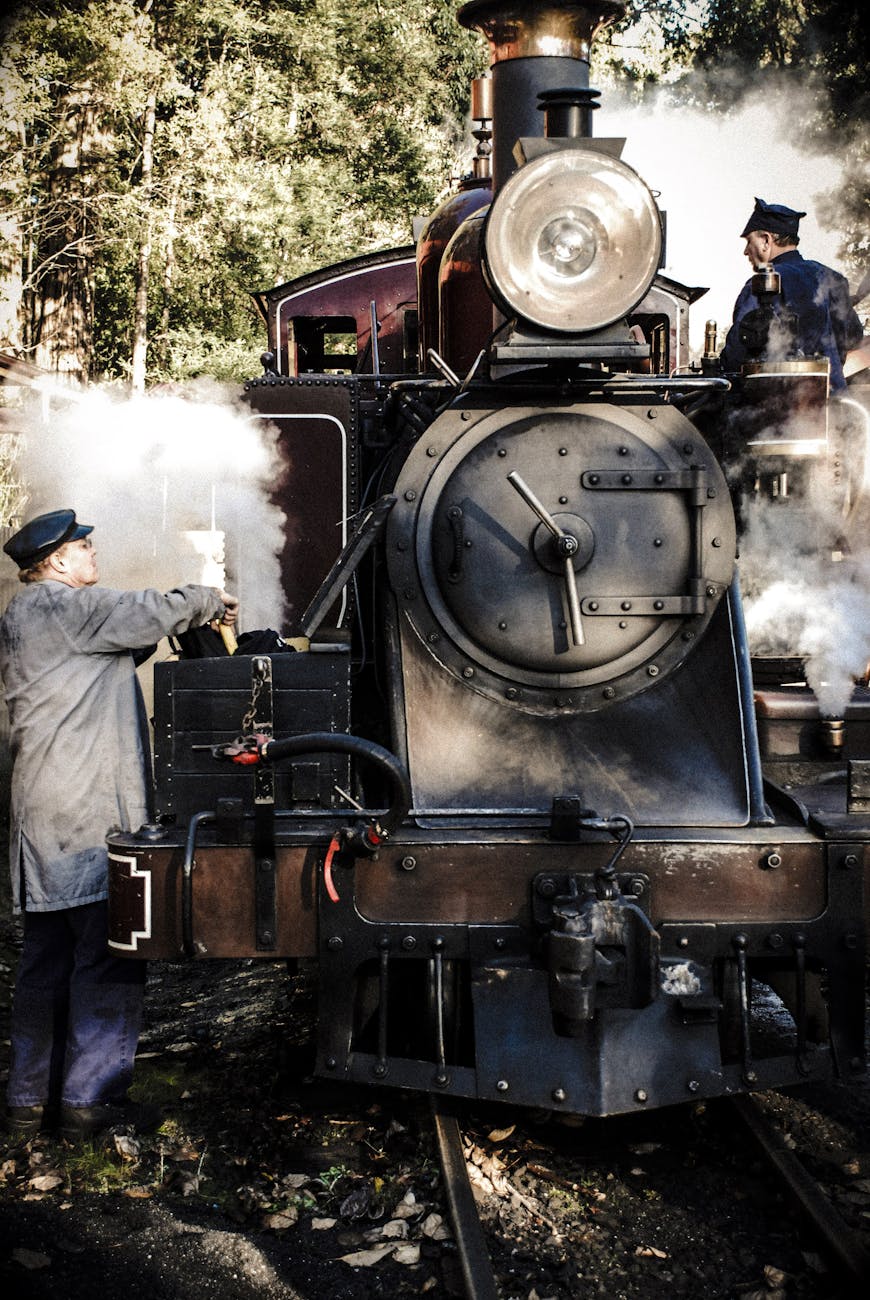
The transformative power of steam has shaped human civilization for millennia, evolving from rudimentary ancient devices to the driving force behind modern industrial might. This journey through the history of steam technology is a testament to human ingenuity and our relentless pursuit of harnessing natural forces for progress. From its earliest conceptualizations to its pivotal role in the Industrial Revolution and its continued relevance today, steam power has fundamentally altered the way we live, work, and interact with the world. This article will explore the fascinating evolution of steam technology, tracing its lineage from its nascent beginnings to its sophisticated applications in contemporary society.
The ancient whispers of steam
The concept of steam’s power was not a sudden revelation of the Industrial Revolution; its early inklings can be traced back to ancient civilizations. The Greeks, in particular, are credited with some of the earliest documented uses of steam. Around the 1st century CE, Hero of Alexandria described the aeolipile, a spherical device that rotated when heated by steam escaping from jets. While primarily a curiosity or a novelty, the aeolipile demonstrated a fundamental understanding of steam’s propulsive force. It was a conceptual leap, showcasing that heat applied to water could generate motion. Other ancient cultures likely experimented with steam in rudimentary ways, perhaps for heating or simple mechanical demonstrations, but these early explorations remained largely theoretical or confined to amusement, lacking the practical application that would define steam’s future.
The dawn of practical steam power
The transition from theoretical curiosity to practical application began in earnest during the late medieval and early modern periods. The need for more efficient ways to pump water out of mines, particularly during the burgeoning mining industry of the 17th and 18th centuries, spurred significant innovation. Early attempts, like those by Thomas Savery with his “Miner’s Friend,” were inefficient and prone to explosions due to the direct use of steam pressure. However, Thomas Newcomen’s atmospheric engine, developed in 1712, marked a crucial turning point. This engine used steam to create a vacuum, which then allowed atmospheric pressure to push a piston down. While it consumed a significant amount of coal, it was far more effective than previous designs and became widely adopted for mine drainage, laying the groundwork for more advanced steam engines.
The revolution of steam: Watt and beyond
The true revolution in steam technology arrived with James Watt. In the 1760s and 1770s, Watt made a series of critical improvements to the Newcomen engine, most notably the addition of a separate condenser. This innovation dramatically increased the engine’s efficiency by preventing the cylinder from repeatedly cooling and reheating, a major source of energy loss. Watt also introduced a parallel motion mechanism that converted the reciprocating motion of the piston into rotary motion, making the engine far more versatile. These advancements transformed the steam engine from a specialized pumping device into a general-purpose power source. The impact was profound: factories could now be powered away from water sources, leading to the growth of industrial cities and the mass production of goods, fundamentally reshaping economies and societies across the globe.
The subsequent decades saw continuous refinement and expansion of steam technology:
- High-pressure steam engines: Developed by pioneers like Richard Trevithick, these engines, while initially dangerous, offered significantly more power for their size, paving the way for applications in locomotives and steamships.
- The steam turbine: Invented by Charles Parsons in the late 19th century, this rotary engine proved far more efficient than piston engines for generating electricity, becoming the backbone of power generation for over a century.
Steam’s enduring legacy in modern industry
While internal combustion engines and electric motors have replaced steam in many direct applications, steam technology remains a cornerstone of modern industry, particularly in power generation. The vast majority of electricity produced worldwide is generated by steam turbines, which are heated by various sources, including fossil fuels, nuclear reactions, and renewable sources like geothermal and concentrated solar power. Steam is also indispensable in numerous industrial processes, such as chemical manufacturing, food processing, and sterilization. Furthermore, the principles learned from early steam engines continue to influence the design and efficiency of modern power systems. The journey from Hero’s aeolipile to the colossal turbines in power plants showcases an unbroken line of innovation, demonstrating the enduring and foundational impact of steam technology on our technological landscape.
To illustrate the scale and efficiency differences:
| Engine Type | Approximate Era | Efficiency (approx.) | Primary Application |
|---|---|---|---|
| Hero’s Aeolipile | 1st Century CE | Negligible | Demonstration/Toy |
| Newcomen Atmospheric Engine | 18th Century | ~1-2% | Mine Pumping |
| Watt’s Improved Engine | Late 18th Century | ~10-15% | Factories, Pumping |
| Modern Steam Turbine | 20th-21st Century | ~30-45% (simple cycle) / up to 60%+ (combined cycle) | Electricity Generation, Industrial Processes |
The history of steam technology is a compelling narrative of human ingenuity, stretching from the playful demonstrations of ancient Greece to the colossal engines that power our modern world. We’ve witnessed the evolution from the simple aeolipile, a testament to early curiosity, to the critical mine-draining engines of the 18th century, and finally to the revolutionary advancements of James Watt, which truly unleashed the power of steam. This technological leap propelled the Industrial Revolution, transforming economies, societies, and the very fabric of daily life. Even today, in the era of sophisticated electronics and advanced materials, steam remains a vital force, primarily through steam turbines that generate the majority of our electricity. The enduring legacy of steam serves as a powerful reminder of how fundamental scientific principles, when harnessed with innovation and perseverance, can drive progress and shape the course of human history for centuries to come.
Image by: Paul Macallan
https://www.pexels.com/@paul-macallan